Coming soon to a high street near you… horse meat burgers?

The Hillbilly Grill II by David Robert Wright, on FlickrA Findus ‘100% beef’ lasagne made from 100% horsemeat now has a market value of over £50 ($75). A bargain.

The woes of the processed meat industry may continue unabated. The exposé of recent weeks has been staggering: horsemeat and pork in ‘beef’ burgers, Non-Halal meat in ‘Halal’ meals and, staggeringly, 100% beef lasagne without a trace of beef (reported to be selling on eBay at over £70). And yet, the humiliation of the big name food manufacturers spreads outside the UK, as Europe-wide testing finds the food industry with its pants down.
Read more

I can’t tweet without you: How twitter feeds our inner longing for friendship

CreativeTools.se - Twitter bird standing on branch - Close-up by Creative Tools, on FlickrI think I’ve started to feel what it’s like to get old. Strange ‘#’ symbols started to flash up on the TV screen a few months back. Some odd new lottery I wondered? Oblivious to the newest and most important media advancement in the last decade, my friends laughed at my ignorance. Graciously educating me in twitter-speak, they taught me what ‘followers’, @ symbols, retweets and trends were. Since 1988 when an 8-bit Commodore 64 arrived in Christmas gift wrap, I have prided myself in being up to date with tech-culture. It seemed much easier when Mario was a child.

Although I am now twitter fluent, and a regular user, try as I may, I don’t get very excited about it. Like Facebook, it feels a chore – akin to laborious Christmas-card-writing – a necessity to stay digitally ‘connected’. Surely I am in the minority: of twitter’s 140 million (and growing) users, most surely use social media for the joy of it – delighting in sharing life’s experiences day, night and through those crafty under-the-table tweets. Read more

What is really in your takeaway pizza?

Via Via IV by The Pizza Review, on FlickrIt’s a Saturday night. Perhaps you shouldn’t have had that last Babycham, but it’s been a hard week and you deserve it. Now, like a Siren luring you to the rocks, the takeout calls. Will it be the kebab van, the burger joint or pizza parlour?

Unlike tightly regulated franchises, most high street vendors don’t need to consider the healthiness of their portions. What we shovel in our gob on a night out is largely an unknown. A team of calorie committed researchers braved the streets to discover what REALLY is in our favourite celebratory cuisine. In this ‘what is really in your food’ series of blog posts, the first delicacy to be brought into the cold light of day is the pizza… (next time, burgers) Read more

Why popular culture is obsessed with Zombies

Oh God the Aftermath EXPLORED!Flesh-eating marauding monsters – frightening? You betcha. Like many of us, I love a good scare every so often and Halloween is a great time to do it. In terms of nightmarish thoughts, there’s little to top a zombie apocalypse. The prospect of being chased by a half-decomposed Granny truly scares me.

They say adrenaline-stimulating shocks quench our pent-up neolithic instincts. Unlike vampires, demons and ghouls, zombies have found phenomenal appeal in recent years. I expect that this year zombie costumes will be more popular than ever. Moreover, other bump-in-the-night-nasties are literally being devoured by the zombie theme. Entertainment is awash: when I last checked, there were 1,400 zombie games in Apple’s iTunes Store (My personal favourite is the bizarrely named ‘Plants vs. Zombies’. There are hundreds of zombie books (I tried counting and gave up) and about 500 movies.

Vampires have been trendy amongst the teens – thanks to the Twilight saga and the adolescent-teenboy-pinup, Buffy. They have probably had their day. I’m convinced the Z-uprising will to outlive other horror fiction and prove to be far more than a passing fad. Yes, the lumbering undead are here to stay. Why? Because like all classic fantasy, they can speak into our world today. Good zombie stories are not only about cheap thrills but can resonate with popular culture on many levels: our fears, our politics and our world views. And no, their significance has nothing to do with the thought of shooting a granny in the head. Read more

Bemused by The Great British Bake Off

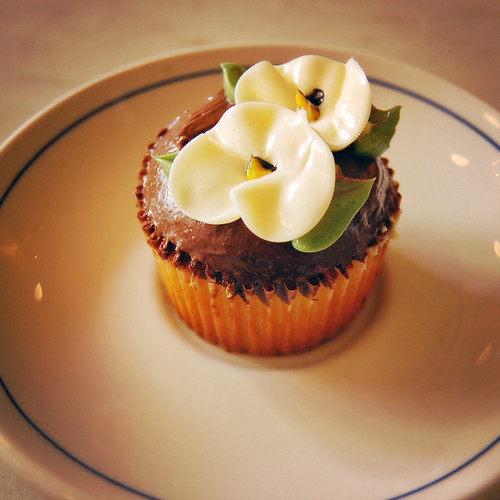
Cup of Cake at Cupcake Cafe
The Great British Bake Off: A talent show for wannabe bakers
I couldn’t help but laugh.

“James’ choux pastry isn’t rising – it’s a real disaster” the commentator said in tones as if poor James’ house had just fallen down. I peered over my wife’s shoulder to see the unfolding catastrophe: anxious looking cooks whisked, poured and prayed (whilst gazing into ovens). An elderly woman wandered around critiquing contestants’ crème patisseries. “Who’s she?” I asked. “She… is the world expert in cooking.” Oh, yes – I should have recognised her. “What about the guy with the beard?” She was less certain this time, “I think he’s got something to do with baking.” I did however recognise the third presenter, British comedienne Sue Perkins. She clearly didn’t know much about cakes (apart from how to eat them). Even without her bouncy persona, this bizarre talent show was comical and somewhat ridiculous – everyday people in a sweaty angst for the sake of a chiffon cake.

Reality TV has invaded mainstream culture. How did this cheap daytime creation become such a phenomenon for TV viewers everywhere? Let’s discover the magic recipe for this newest middle-class guilty pleasure. Cue the tense music… will the cupcakes rise in time..? Read more

Get fit faster: listen to music!

Hill Attack. Tension Up! #4It’s now officially Games Over. Gone is the excuse to bunk off work to catch five minutes of of dressage or synchronised swimming. And as our love affair ends, normal life must resume. The real challenge now begins: to stay true to those keep-fit resolutions.

One of the tricks to stay motivated may be, quite literally, music to your ears. ‘Music has received very little attention among sports scholars’ wrote one author in 1993 in the Sociology of Sport Journal.  Since then, much has changed. Long distance champ Paula Radcliff swears that her playlist during training – insisting it helps to keep her going. Yet Usain Bolt is denied such an indulgence.

Taking a perusal trough the latest research, we’ll explore what is known about the power of music to get you fired up and heading down the gym. Even when The X-Factor is on… Read more

Why I hope this is the last Paralympics

053Blink and you just might miss it. If you don’t live in the UK, that is. Last night, 80,000 people watched the Paralympic opening ceremony – a slightly more modest, but nonetheless equally poignant affair than its bigger brother. As the kids return to school and the Olympic feel-good fades, it offers a last-hurrah for an enthralling and passion-filled spectacle. Celebrating ability and achievement in the face of physical, mental and psychological ‘disability’, I will savour watching it. At the same time though, I hope I don’t have to watch it ever again. Read more

The challenge to live a ‘no impact’ life

no-impact-manOf all the consumables I couldn’t live without, it wouldn’t be the internet. Neither would it be chocolate, ice cream or shampoo. I think I could cope without electricity just fine (I learnt how to make camp fires as a child). No, the one thing that would really chafe me (quite literally) would be not having toilet paper.

I’m not usually one for watching documentaries, but last night my wife and I forewent our trashy film fascination to watch the 2010 documentary ‘No Impact Man’. It follows a year in the life of New York writer Colin Beaven and his family’s attempt to live a year with no-net impact on the environment. No plastic, no elevators, no public transport, no electricity and only locally-sourced food. And no toilet paper.

For an upper-middle class family who think nothing of spending $1,000 on a handbag, their painful transition certainly makes for compelling viewing. Were they bonkers? Quite possibly. The US tabloid media certainly thought so, and were lambasted as self-promoting weirdoes. Their motives appeared genuine, and after watching their efforts it is difficult to not be challenged; which is perhaps why their experiment attracted so much antagonism. No Westerner likes to think that they are living a lifestyle that sucks the planet dry. No one likes to admit they’re wrong. No one likes to give anything up.

Few of us are going to cast everything modern aside and wash our laundry with borax and bicarbonate of soda. But if there was one thing – even a small thing – that we could change to make a measurable difference to the environment, what would it be? The answer to that question might surprise you. Read more

The real legacy of the Olympics: uncomfortable truths.

Olympic StadiumAbout 15 years ago, I visited the Montreal Olympic Village. A captivating and beautiful city, the Olympic Village was a complete contrast. Tired-looking vacant stadia and vast, mostly unused concrete behemoths populated by a few shuffling tourists. I found it a depressing place and the slowly flaking paint symbolised a squandered enterprise. Costing Canada $1bn, the 1976 Montreal Olympics were the greatest financial disaster in the history of the Olympic games.

UK residents will be well-versed with Prime Minister David Cameron’s rhetoric: London 2012 will leave a ‘lasting legacy’ for the UK and London. It will regenerate to a deprived London district; increase tourism, improve infrastructure and give a much-needed economic boost. These are compelling and believable justifications for spending £9bn ($14bn) from the public purse. However, claims of a major economic boost have already shown themselves to be exaggerated: increased sales and footfall in Stratford have so far been cancelled out by losses in the West End.

My heart says that London 2012 is a good thing for the UK. Yet I can’t help feeling we have been misled by the politicians’ claims that it will make a better Britain. There is ample evidence to investigate claims about tourism, economics and even the ‘feelgood’ factor. David Cameron, like practically every country leader before him, has chosen political points over a sincere explanation of the evidence. Let’s find out what the legacy of London 2012 will most likely look like… Read more

Could you survive a week without emails?

monday
‘You’ve got mail’ – *groan*
It’s 7.30am and the emails have already started. As I sit, savouring a few moments calm over a bowl of muesli before leaving for work, the phone has already started to chime. The ‘silent’ phone setting insists on buzzing on the table top – vibrating my coffee mug. I have resigned myself to the alternative ‘classic’ ding-dong. I guess my working day has begun.

Although I can rarely follow my employer’s ‘good ICT policy’ – fastidiously filing every email into a named subfolder (I never know where to put ‘Today’s Lunch Offer’), most days I click each email just long enough for it to be marked as ‘read’. Few of my colleagues manage this. I guess working part-time has some benefits.

Relentless work emails and calendar invitations that materialise from the electronic ether is the norm for many. This incessant distraction is a drain and – it doesn’t take a genius to figure out – probably drains productivity. The phone is dead: the majority of interactions are now done digitally. Could we sever our digital ties and survive at work without the emails? One group of workers did just that – for one week they went without emails. Researchers watched what they did and remotely monitored their stress levels. How did they cope? Surprisingly well… Read more